
How to Start Affiliate Marketing in Bangladesh Without a Website
Affiliate marketing continues to attract attention as one of the more accessible ways to earn online income, largely because it doesn’t require creating a product, holding inventory, or handling customer service. For many beginners, though, one assumption still holds people back: the belief that a website is mandatory before getting started. That assumption is increasingly outdated, and understanding how affiliate marketing without a website actually works can open up options that many beginners overlook entirely.
In Bangladesh, where smartphone use and social media activity are widespread, affiliate marketing without a website has become a realistic starting point for students, freelancers, content creators, and anyone exploring online income opportunities. Platforms like YouTube, Facebook, Instagram, and TikTok already offer the reach that a website used to provide, often with a lower technical barrier to entry and a shorter learning curve for someone just getting started.
This guide walks through what affiliate marketing actually involves, how it works in practice, and which platforms and tools beginners in Bangladesh can use instead of a traditional website. It also covers niche selection, reputable affiliate programs, content strategies, common mistakes, and scams to avoid — all with realistic expectations rather than exaggerated promises about how quickly or easily results appear.
By the end, you’ll have a clear, practical roadmap for getting started, along with the foundational knowledge needed to build an affiliate marketing effort that grows steadily over time, rather than one built on shortcuts, unrealistic income claims, or programs that ask for money upfront in exchange for vague promises.
What Is Affiliate Marketing?
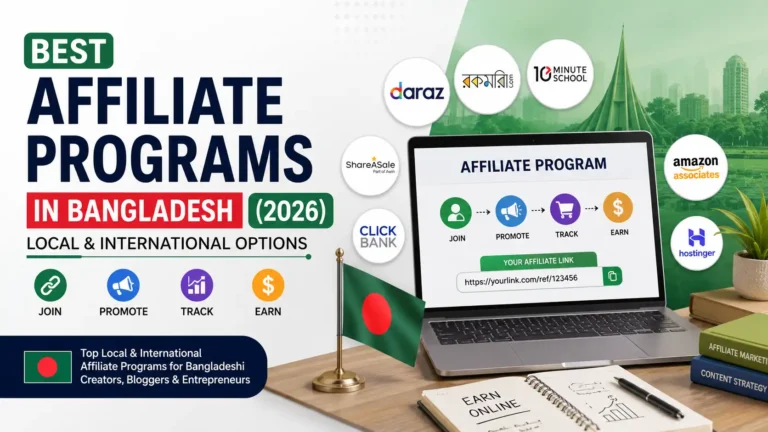
Affiliate marketing is a performance-based arrangement where a person or business (the affiliate) promotes another company’s product or service and earns a commission when someone makes a purchase or completes a specific action through their unique referral link. It’s used across nearly every industry, from software and electronics to online courses and physical products.
How Affiliate Marketing Works
The process generally follows a simple structure:
- An affiliate joins an affiliate program or network and receives a unique tracking link.
- The affiliate shares this link through content — videos, posts, reviews, or recommendations.
- When someone clicks the link and completes a qualifying purchase or action, the affiliate platform records the transaction.
- The affiliate earns a commission, which is typically paid out on a regular schedule once a minimum payment threshold is met.
Tracking is usually handled through cookies or unique link identifiers, which is why affiliates are generally advised not to alter or mask their links in ways that violate a program’s terms.
Can You Start Affiliate Marketing Without a Website?
Yes. While a website can offer long-term advantages — such as more control over content and better search visibility — it is not a strict requirement to begin. Many successful affiliates start entirely through social media platforms, YouTube channels, or messaging apps, using link-in-bio tools and landing page builders as a website alternative. A website often becomes more valuable later, once an audience has already been established elsewhere.
Is Affiliate Marketing Legal in Bangladesh?
Affiliate marketing is generally considered a legitimate, globally recognized business model, and there is no specific prohibition against it in Bangladesh. That said, creators are still expected to comply with applicable laws, including tax obligations, payment and foreign currency regulations, and the specific terms of each affiliate program they join. This article does not provide legal or tax advice, and consulting a qualified professional is generally recommended for specific situations.
Skills Needed Before Starting
Beginners don’t need advanced technical skills, but a few foundational abilities help significantly:
- Basic content creation (writing, video, or both)
- Understanding of the chosen platform’s format and audience expectations
- Willingness to research products honestly before recommending them
- Basic familiarity with tracking links and affiliate dashboards
- Patience, since meaningful results typically take consistent effort over time
Choosing a Profitable Niche
A niche is the specific topic or product category an affiliate focuses on. A good niche typically balances three factors: genuine personal interest, existing audience demand, and the availability of relevant affiliate programs. Common beginner-friendly niches include technology and gadgets, personal finance, beauty and skincare, home and lifestyle products, online courses, and software tools. Choosing a niche that’s too broad can make it harder to build a focused, trusted audience.
Selecting the Right Affiliate Programs
Local and International Affiliate Programs
Bangladesh-based affiliates commonly use a mix of local and international programs depending on their niche. Local e-commerce platforms may offer their own affiliate or referral programs, while international networks provide access to a much wider range of products and services.
Amazon Associates
Amazon Associates is one of the most widely recognized affiliate programs globally, offering commissions on a broad range of physical products. Affiliates should review Amazon’s official Associates Program policies carefully, as the program has specific rules around link usage, disclosures, and promotional methods.
Impact
Impact is an affiliate network that connects marketers with a wide range of brands across various industries, often including software, retail, and travel companies.
CJ Affiliate
CJ Affiliate (formerly Commission Junction) is a long-established affiliate network offering access to numerous well-known brands, particularly suited to affiliates with an established content platform.
ShareASale
ShareASale, now operating as part of the Awin Group, is a beginner-friendly affiliate network known for its relatively simple approval process and wide selection of merchants across different categories.
ClickBank
ClickBank primarily focuses on digital products, such as online courses and software, and is often used by affiliates promoting educational or informational content.
Digistore24
Digistore24 is another digital product-focused affiliate network, commonly used for online courses, e-books, and software subscriptions.
PartnerStack
PartnerStack is generally geared toward B2B and SaaS (software-as-a-service) affiliate and partnership programs, often appealing to affiliates with an audience interested in business tools.
Other Reputable Networks
Depending on the niche, beginners may also come across other established networks or direct affiliate programs run by individual companies. Reviewing each program’s official terms and approval requirements before applying is generally a good practice.
Using Social Media Platforms Without a Website
YouTube
YouTube is one of the most effective platforms for affiliate marketing without a website, particularly through product reviews, comparisons, tutorials, and “how-to” content. Affiliate links are typically placed in the video description, and disclosure is required when a video includes paid or affiliate promotions.
Facebook Pages
A dedicated Facebook Page allows affiliates to build a following around a specific niche, sharing content, recommendations, and links directly in posts.
Facebook Groups
Niche-focused Facebook Groups can build a more engaged community, though affiliates should follow group rules and avoid overly promotional posting that could be seen as spam.
Instagram works well for visually appealing niches, using posts, Reels, and Stories, along with link-in-bio tools since Instagram limits clickable links within regular posts.
TikTok
TikTok’s short-form video format is well suited to quick product demonstrations, honest reviews, and trend-based content, often driving traffic to a link-in-bio page.
LinkedIn can be effective for B2B-focused affiliate niches, such as software tools, online courses, or professional development resources.
X (Twitter)
X can be used to share quick recommendations, threads, or links to reviews, though affiliates should be mindful of platform rules regarding promotional content.
Pinterest functions well for niches like home décor, fashion, recipes, and lifestyle products, often driving traffic through visually appealing pins linked to landing pages or affiliate offers.
WhatsApp Channels
WhatsApp Channels allow affiliates to broadcast updates, recommendations, and links to subscribers, which can work well for building a direct, ongoing relationship with an audience.
Telegram Channels
Telegram Channels are popular for niche communities and can support regular content updates, deal alerts, and affiliate link sharing.
Email Marketing Without a Website
Building an email list remains a viable affiliate marketing method even without a website, using landing page tools to collect email addresses and email marketing platforms to send newsletters, product recommendations, and updates directly to subscribers.
Landing Page Tools
Landing page builders allow affiliates to create a simple, focused page — without needing a full website — that can host an offer, collect email sign-ups, or serve as a link-in-bio destination.
Link-in-Bio Tools
Link-in-bio tools let affiliates create a single page containing multiple clickable links, which is especially useful on platforms like Instagram and TikTok that restrict clickable links in regular posts.
URL Shorteners
URL shorteners can make long affiliate links more shareable and easier to read. However, affiliates should always disclose that a shortened link may lead to an affiliate offer, and should avoid using shorteners in a way that hides the destination in a misleading manner, which can violate both platform policies and affiliate program terms. More broadly, practices like dumping unlabeled links across multiple groups, sending mass unsolicited messages, using misleading redirects, or cloaking affiliate links to disguise their destination can violate platform rules and damage audience trust, and are generally best avoided.
Creating Valuable Content
Product Reviews
Honest, detailed product reviews — covering both strengths and limitations — tend to build more trust than one-sided promotional content.
Comparison Content
Comparing two or more similar products helps audiences make informed decisions and often performs well in search and video platforms alike.
Tutorials
Tutorial content that shows how to use a product effectively can naturally incorporate affiliate links without feeling overly promotional.
Educational Posts
Content that teaches something valuable related to the niche — even without directly promoting a product — helps build long-term audience trust and authority.
Short-Form Video Content
Short-form videos on platforms like YouTube Shorts, TikTok, and Instagram Reels can introduce products quickly and drive traffic to a link-in-bio page or landing page.
Building Audience Trust
FTC Disclosure Guidance
Clear disclosure of affiliate relationships is considered a best practice across the industry and is required under guidance from organizations such as the Federal Trade Commission (FTC) for audiences in relevant jurisdictions, as well as under platform-specific policies from YouTube and Meta. A simple, visible disclosure — such as stating that a post or video contains affiliate links — helps maintain transparency and audience trust. In practice, this might look like adding “This video includes affiliate links” in a YouTube description, a short “#ad” or “contains affiliate links” note on a Facebook or Instagram post, or a brief disclosure line at the top of a Telegram channel post before sharing a product link.
Honest Product Recommendations
Recommending products only after genuine research or use, and being upfront about limitations, generally builds stronger long-term credibility than promoting anything and everything for a commission.
Common Affiliate Marketing Mistakes Beginners Should Avoid
- Promoting too many products at once. This can dilute focus and make it harder to build authority in any single niche.
- Ignoring platform disclosure rules. Failing to disclose affiliate links can violate platform policies and damage audience trust.
- Choosing programs before choosing a niche. Selecting affiliate programs without first understanding audience needs often leads to weaker content.
- Neglecting content quality for volume. Posting frequently without providing genuine value rarely builds a loyal audience.
- Expecting fast results. Meaningful income generally builds gradually as trust and audience size grow.
- Not tracking performance. Without reviewing which links and content perform well, it’s difficult to improve over time.
Affiliate Marketing Scams to Watch Out For
Unrealistic Income Promises
Be cautious of any program or “mentor” promising guaranteed income, passive earnings with no effort, or rapid wealth. Legitimate affiliate marketing generally requires consistent effort, especially in the early stages.
Pay-to-Join Affiliate Schemes
Reputable affiliate programs typically don’t charge a fee simply to join as an affiliate. Programs requiring upfront payment to “unlock” affiliate status should be researched carefully before proceeding.
Fake Courses and Mentorship Programs
Some paid courses exaggerate potential earnings or rely heavily on urgency-based sales tactics. Researching independent reviews before purchasing any paid training is generally a wise precaution.
Pyramid-Style Recruitment Schemes
Be cautious of any “affiliate opportunity” that focuses primarily on recruiting other affiliates rather than promoting an actual product or service, as this can resemble a pyramid or multi-level marketing structure rather than genuine affiliate marketing.
Tracking Clicks and Conversions
Most affiliate networks and programs provide a dashboard showing clicks, conversions, and earnings for each link. Reviewing this data regularly helps identify which content, platforms, and products are performing well, allowing affiliates to refine their approach over time.
Free Tools for Beginners
Beginners can start with free versions of link-in-bio tools, basic landing page builders, free email marketing plan tiers, and built-in analytics from social platforms themselves, gradually upgrading to paid tools as their audience and income grow.
AI Tools That Can Help Create Content Ethically
AI-assisted tools can support affiliates with tasks like brainstorming content ideas, drafting outlines, or improving writing clarity. When used ethically, these tools should support genuine, honest content rather than generating exaggerated claims or misleading product descriptions. Reviewing and fact-checking any AI-assisted content before publishing remains an important step.
Payment Methods Commonly Available for Affiliate Marketers in Bangladesh
Affiliate networks commonly offer a range of payment options, which may include bank wire transfer, PayPal, or other international payment processors, depending on the specific program, account eligibility, and service availability in the affiliate’s country. Availability can vary by network, so reviewing each program’s current payment policies before joining is recommended.
Tax and Payment Considerations
Income earned through affiliate marketing, including from international programs, may be subject to applicable tax obligations depending on individual circumstances. This article does not provide legal or tax advice; consulting a qualified accountant or tax professional familiar with Bangladeshi regulations is generally recommended for specific guidance, including for any current cross-border payment or foreign currency requirements that may apply.
Affiliate platform policies, program terms, and payment options can change over time. Reviewing the latest official documentation for each affiliate network before publishing content or relying on a specific payment method is generally a good practice.
How Long It May Take to Earn Your First Commission
There’s no fixed timeline, as it depends on niche competitiveness, content quality, platform choice, and consistency. Some beginners may see their first commission within a few weeks of active promotion, while for others it may take longer, particularly if audience-building is still in early stages. Setting realistic expectations from the start can help maintain motivation.
Realistic Expectations
Affiliate marketing can become a meaningful income source over time, but it typically requires sustained effort, genuine audience building, and patience. It is not a guaranteed or passive income model, especially in the early stages, and results vary significantly based on niche, effort, and consistency.
Step-by-Step Roadmap for Beginners in Bangladesh
- Choose a niche based on genuine interest, audience demand, and available affiliate programs.
- Select a primary platform — such as YouTube, Facebook, Instagram, or TikTok — based on where your target audience spends time.
- Join one or two affiliate programs relevant to your niche, reviewing each program’s terms carefully.
- Set up a link-in-bio or simple landing page to organize and share your affiliate links.
- Create your first pieces of content, focusing on genuine value — reviews, tutorials, or comparisons.
- Disclose affiliate relationships clearly in every relevant post or video.
- Track performance using your affiliate dashboard and platform analytics.
- Refine your content strategy based on what resonates with your audience.
- Expand gradually to additional platforms, programs, or content formats as your audience grows.
Practical Success Tips
- Focus on solving a real problem or answering a real question your audience has.
- Be consistent rather than sporadic with content publishing.
- Stay updated on platform policy changes related to affiliate content.
- Build genuine engagement rather than only focusing on link clicks.
- Reinvest early earnings into better tools or content quality as it makes sense.
Affiliate Marketing Launch Checklist
- Choose a specific, manageable niche
- Select a primary content platform
- Join one or two reputable affiliate programs
- Set up a link-in-bio or landing page tool
- Create and publish your first honest, value-focused content
- Include clear affiliate disclosures on every relevant post
- Set up basic click and conversion tracking
- Review your affiliate program’s payment and policy terms
- Plan a consistent content publishing schedule
- Revisit and refine your strategy based on performance data
Frequently Asked Questions
Do I need a website to start affiliate marketing?
No. Many affiliates start successfully using social media platforms, YouTube channels, or link-in-bio tools instead of a traditional website.
Which affiliate program is best for beginners in Bangladesh?
There isn’t a single “best” program, as the right choice depends on your niche and audience. Beginner-friendly options often include networks like ShareASale or Amazon Associates, depending on the products you plan to promote.
Is affiliate marketing a form of passive income?
Affiliate marketing can eventually generate income with less ongoing effort once content is established, but it generally requires consistent upfront work and isn’t a truly passive or guaranteed income source, especially early on.
How much money can I realistically make from affiliate marketing?
Earnings vary significantly based on niche, audience size, content quality, and consistency. There’s no fixed or guaranteed amount, and beginners should approach income expectations realistically.
Do I have to disclose that I’m using affiliate links?
Yes. Clear disclosure of affiliate relationships is considered a best practice and is required under guidance from organizations like the FTC, as well as under platform policies from YouTube and Meta.
Can I use multiple affiliate programs at the same time?
Yes, many affiliates work with more than one program, particularly once they’ve established a niche and audience, though beginners often benefit from starting with just one or two programs to keep things manageable.
Are affiliate marketing courses worth paying for?
Some paid courses offer genuine value, while others exaggerate potential results. Researching independent reviews and comparing free educational resources first is generally a wise approach before purchasing paid training.
How do I know if an affiliate program is legitimate?
Reputable affiliate programs typically don’t charge a fee to join, provide clear terms and payment policies, and are transparent about how commissions are tracked and paid. Researching a program’s reputation and official documentation before joining can help avoid scams.
Final Thoughts
Starting affiliate marketing without a website is entirely achievable for beginners in Bangladesh, particularly given how much reach and engagement social media and video platforms now offer. Success generally depends less on having a polished website and more on choosing a focused niche, joining legitimate affiliate programs, creating genuinely valuable content, and building trust with an audience over time. Approaching affiliate marketing with realistic expectations — rather than chasing unrealistic income promises — tends to lead to steadier, more sustainable results in the long run.