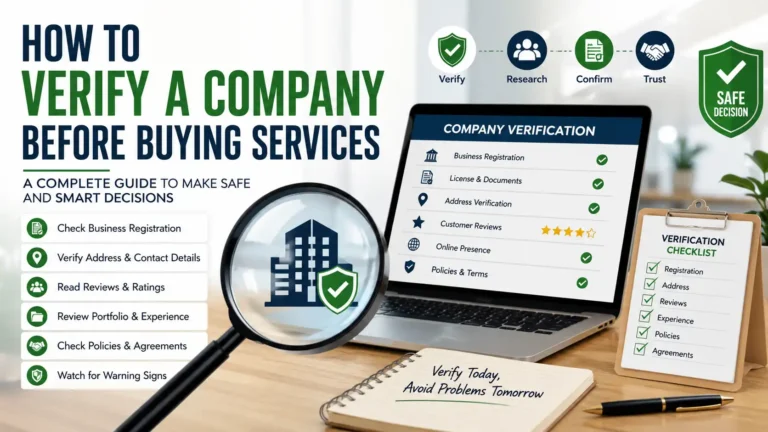

Why Customer Reviews Matter for Businesses
Every business tells its own story — on its website, its social pages, its ads. Customer reviews are the part of the story the business doesn’t write. They are public, permanent, and largely outside the company’s control, which is exactly why buyers trust them and why search engines pay attention to them.
For businesses, this creates both an opportunity and an obligation. Reviews influence whether a searcher clicks your listing or a competitor’s, whether a comparison ends in your favor, and how established your business appears in local search. A business that earns, manages, and responds to reviews well converts customer satisfaction into visible, compounding reputation. A business that ignores them lets strangers write its public image unanswered.
This guide explains how reviews actually work for businesses: why they influence buying decisions, how they connect to trust and local SEO, how to respond to positive and negative feedback, how to encourage genuine reviews ethically, why fake reviews backfire, and how to measure whether any of it is moving results. It is written for business owners first — practical over theoretical throughout.
Who Should Read This Guide?
This guide is for anyone whose business is — or will be — reviewed online:
- Small business owners in Bangladesh and beyond: shops, restaurants, clinics, salons, coaching centers, and service providers whose next customer is reading reviews right now.
- Service professionals — repair technicians, designers, consultants, contractors — whose work quality is invisible until someone describes it publicly.
- Online sellers competing on marketplaces and social platforms, where ratings often decide the sale.
- Marketing staff and freelancers managing reputation and listings for clients.
- New businesses deciding how to earn their first reviews honestly.
- Consumers will also find the sections on genuine versus fake reviews useful, since the same patterns that businesses should avoid are the ones smart buyers learn to detect.
If people can rate and describe your business publicly, this guide applies to you.
What Are Customer Reviews?
What are customer reviews? Customer reviews are public evaluations written by people who have interacted with a business — describing the product, service, or experience, usually with a rating. They appear on platforms such as Google Business Profile, business directories, marketplaces, and social pages, and they function as independent evidence of how a business actually performs.
A customer review is feedback made public: a rating, usually accompanied by text, published where other potential customers can read it. Reviews live on Google Business Profile and Google Maps, on business directories, on marketplaces, on Facebook pages, and on industry-specific platforms.
What makes reviews distinct from every other form of business communication is who controls them. Ads, websites, and brochures say what the business chooses. Reviews say what customers experienced — in their own words, on their own initiative, visible whether the business likes it or not.
Customer Reviews vs Testimonials
The two are often confused, and the difference matters:
|
Aspect |
Customer Reviews |
Testimonials |
|---|---|---|
|
Who publishes |
The customer, on a third-party platform |
The business, on its own website or materials |
|
Selection |
All feedback appears — positive and negative |
The business chooses which quotes to display |
|
Control |
Outside the business’s control |
Fully controlled by the business |
|
Credibility to buyers |
Higher — independent and unfiltered |
Lower — curated by definition |
|
Typical role |
Evidence |
Marketing |
Testimonials have a legitimate place in marketing, but buyers instinctively discount them because the business picked them. Reviews carry weight precisely because the business couldn’t.
Why Customer Reviews Matter for Businesses
Why are customer reviews important? Customer reviews matter because they influence buying decisions, build or erode trust before any contact happens, contribute to local search visibility, and provide honest feedback businesses can act on. For many buyers, reviews function as the deciding evidence between otherwise similar businesses.
Reviews matter through four practical channels:
1. They are pre-sale evidence. Before a customer calls, visits, or orders, they usually look. What they find — the rating, the recent reviews, how complaints were handled — shapes the decision before the business even knows a decision is being made.
2. They compound into reputation. A single review is an anecdote; hundreds accumulated over years are a track record. That track record follows the business into every search result, every directory listing, and every comparison — working for it or against it continuously.
3. They feed local search visibility. Reviews are part of how established and relevant a business appears in local search — covered in depth in the local SEO section below.
4. They are free market research. Reviews tell a business, unprompted and unfiltered, what customers value and where the experience breaks. Businesses that read their reviews as data — not just as praise or attack — find their most honest consultant is already talking to them.
There is also an honest fifth point: reviews matter because customers have decided they matter. Review-checking is now a normal step in consumer behavior, in Bangladesh as elsewhere — buyers comparing local businesses routinely weigh ratings and read recent feedback as part of choosing a trusted business in Bangladesh. A business without a review presence isn’t opting out of the system; it is simply absent from a comparison that happens anyway.
How Customer Reviews Influence Buying Decisions
Reviews shape decisions at several distinct moments in the buying journey:
At discovery: ratings appear directly in search results, map listings, and directory pages. Before reading a word, a searcher sees stars — and listings with healthy ratings and meaningful review counts attract more clicks than empty or poorly rated ones.
At comparison: when buyers shortlist two or three options, reviews often become the tiebreaker. Price and photos being similar, the business whose reviews are recent, specific, and professionally answered tends to win the contact.
At verification: careful buyers use reviews as a due-diligence tool — reading negative feedback for patterns, checking how the business responds, and cross-referencing platforms, exactly as consumer guides on verifying a company before buying services teach. For these buyers, review behavior is a trust signal on par with registration and policies.
At the final hesitation: a recent detailed review describing exactly the buyer’s situation — same service, same concern, good outcome — frequently supplies the final confidence a purchase needs. Conversely, one unanswered complaint describing the buyer’s worst fear can end the sale silently.
Two properties of reviews amplify all of this:
- Recency: buyers weight recent reviews heavily, because they describe the business as it is now. A strong rating built years ago fades in persuasive power if the recent page is empty or negative.
- Specificity: detailed reviews persuade far more than generic praise, because detail is hard to fake and easy to relate to. “Delivered in three days, packaging intact, replaced a defective unit without argument” outsells fifty “Great shop!” comments.
Customer Reviews and Business Trust
How do customer reviews build trust? Reviews build trust by providing independent, unfiltered accounts of real experiences — evidence a business cannot simply write for itself. A visible history of genuine feedback, including imperfect ratings handled professionally, shows potential customers how the business behaves over time, which marketing alone can never demonstrate.
Trust, for a buyer, is a prediction: will this business treat me the way it claims? Reviews are among the few public sources that help answer it, because they describe what the business did rather than what it says.
Several review characteristics build trust in ways worth understanding:
Volume over time. Feedback accumulated steadily across months and years demonstrates a real, continuing customer base — a form of longevity evidence no ad can buy.
Imperfection. Counterintuitively, a natural mix of ratings often builds more trust than perfection. Buyers know real businesses have imperfect days; a spotless wall of five stars at high volume reads as curated, while a strong-but-honest record reads as true.
Response behavior. How a business answers criticism in public is character on display. A professional, accountable response to a bad review frequently does more for trust than ten positive reviews — because it shows what happens when things go wrong, which is what a cautious buyer actually wants to know.
Consistency with everything else. Reviews are one signal among many. When they align with the rest of a business’s footprint — accurate listings, real address, working contact details, transparent policies — each signal reinforces the others. When they conflict, buyers notice.
For businesses, the strategic conclusion is simple: trust cannot be claimed, only evidenced — and reviews are where the evidence lives.
Customer Reviews and Local SEO
Do customer reviews affect SEO? Reviews contribute to local search visibility. Google currently describes local ranking in terms of relevance, distance, and popularity (commonly called prominence in the SEO community), and review signals — such as genuine feedback accumulated over time — form part of how established a business appears. Reviews also improve click-through from search results.
Reviews connect to local SEO through several routes:
They feed the popularity factor. Google currently describes local ranking around relevance, distance, and popularity (commonly called prominence in the SEO community). Information from across the web, including reviews, contributes to how well-known and well-regarded a business appears — and genuine reviews accumulated on a Google Business Profile and other credible platforms are part of that footprint.
They influence clicks, which influence outcomes. Ratings display directly in map listings and some search results. Whatever the ranking mechanics, a listing with visible healthy ratings earns more clicks than a bare one — and clicks, calls, and direction requests are the outcomes rankings exist to produce.
They add fresh, relevant content to listings. Review text describes services in customers’ natural language — the same words other customers search with. A steady flow of genuine reviews keeps a listing active and descriptive without the business writing a word.
They strengthen the broader citation ecosystem. Reviews on business directories and other platforms extend the same effect beyond Google — part of the wider consistency-and-presence system explained in our guide to how business directories help local SEO.
The honest framing, consistent with everything else in this series: reviews are a contributing signal, not a ranking lever. No volume of reviews substitutes for relevance, proximity, accurate listings, and a real operating business. Reviews amplify a solid local presence; they cannot conjure one.
Customer Reviews and Google Business Profile
For most local businesses, the Google Business Profile is where reviews matter most, because it is where customers encounter them first — in Google Search and Google Maps, attached to the map listing and business panel, often before visiting any website. Profiles and listings are typically among the first places buyers look when finding verified businesses online.
Practical points for managing reviews on a profile:
- Claim and complete the profile first. Reviews attach to the listing; an unclaimed or half-empty listing wastes the reviews it receives.
- Reviews are public conversations. Both the review and the owner’s response are visible to every future searcher. Write responses for the audience, not only the reviewer.
- Follow platform rules strictly. Review policies generally prohibit fake reviews, review gating (filtering who gets asked based on sentiment), and incentivized reviews. Violations can lead to removed reviews or worse — and the policies apply regardless of who posted the content.
- Flag genuine policy violations; answer everything else. Platforms provide reporting for reviews that break rules (spam, harassment, off-topic content). Reviews that are merely negative are not violations — they are feedback to respond to.
- Watch the profile’s Q&A and photos too. Reviews are the loudest customer content on a profile, but not the only kind; a managed profile stays accurate across all of it.
Google Reviews vs Directory Reviews
|
Aspect |
Google Business Profile Reviews |
Business Directory Reviews |
|---|---|---|
|
Visibility |
Directly in Google Search and Maps |
Within the directory’s pages and audience |
|
Typical volume |
Usually the largest single source |
Varies by directory |
|
SEO role |
Feeds the profile’s local presence |
Extends footprint and citations across the web |
|
Audience intent |
Searchers at decision moments |
Category browsers comparing options |
|
Management |
Via the business’s Google account |
Via each directory’s listing controls |
The two complement each other: the profile carries the volume and the search visibility, while directory reviews extend reach and corroborate reputation where comparison shopping happens.
Positive vs Negative Reviews
Both kinds of reviews carry value — and both carry risk, depending entirely on how the business handles them.
|
Aspect |
Positive Reviews |
Negative Reviews |
|---|---|---|
|
What they prove |
Satisfaction exists and is repeatable |
Where the experience breaks — and how you respond |
|
Buyer reading |
Confirmation and confidence |
The stress test: what happens when things go wrong |
|
Risk if ignored |
Missed relationship-building; appears indifferent |
Complaint stands unanswered as the last word |
|
Opportunity |
Reinforce, thank, invite return |
Demonstrate accountability publicly; recover the customer |
|
Danger |
Suspicious if generic and clustered |
Damaging if met with hostility or excuses |
Two truths business owners often resist, stated plainly:
A negative review is rarely fatal — but a bad response can be. Buyers read negative reviews expecting occasional problems; what they judge is the business’s reply. Defensive, hostile, or dismissive responses confirm the complaint. Accountable ones frequently neutralize it.
A perfect score is not the goal. A realistic strong rating with detailed feedback and professional responses persuades careful buyers more than flawlessness, which increasingly triggers skepticism. The goal is a truthful record that survives scrutiny — because informed customers scrutinize.
How Businesses Should Respond to Reviews
How should businesses respond to reviews? Respond to reviews promptly, professionally, and publicly: thank positive reviewers specifically, and answer negative reviews with acknowledgment, a factual and non-defensive explanation where appropriate, a concrete path to resolution, and an offline contact for details. Every response is read by future customers deciding whether to trust the business.
Principles first, then examples:
- Respond to negative reviews quickly and calmly. Speed shows attentiveness; calm shows professionalism. Never reply angry — the response outlives the mood.
- Acknowledge before explaining. Whether or not the complaint is fully fair, the experience was real to the customer. Acknowledgment is not admission; it is respect.
- Take specifics offline, keep accountability online. Publicly commit to resolving; privately handle details. The public record should show ownership, not a dispute transcript.
- Never argue, blame the customer, or reveal their private details. Each is a reputation wound that the business inflicts on itself, in writing, permanently.
- Thank positive reviewers specifically. A response that references their actual experience (“glad the delivery timing worked for your event”) reads as genuine; copy-paste gratitude reads as automation.
- Stay honest in responses. Don’t promise what won’t happen or claim fixes that aren’t real — reviewers return, and follow-up reviews quoting broken promises are among the most damaging content a listing can carry.
Review Response Examples
|
Situation |
Weak Response |
Stronger Response |
|---|---|---|
|
Negative: late delivery |
“Delays happen. Not our fault, courier issue.” |
“You’re right that the delivery took longer than we promised, and we’re sorry for the disruption. We’ve raised this with our courier and are reviewing timelines. Please message us with your order number — we’d like to make this right.” |
|
Negative: service complaint |
“No one else has complained about this.” |
“Thank you for telling us — this isn’t the experience we aim for. We’d like to understand what happened and fix it; please contact us at [contact]. We take this seriously.” |
|
Positive: detailed praise |
“Thanks.” |
“Thank you — we’re glad the installation went smoothly and the team explained everything clearly. We look forward to serving you again.” |
|
Unfair or mistaken review |
“This is a fake review. This customer is lying.” |
“We take all feedback seriously, but we can’t match this review to any recent transaction. Please contact us directly so we can investigate — and if this was posted in error, we’d appreciate a correction.” |
The pattern across every strong response: composed, specific, accountable, and written with the silent audience in mind.
How to Encourage Genuine Customer Reviews
Businesses can ethically grow their review base — the key word is genuine:
- Ask. The single most effective method is simply requesting a review from real customers, at the natural moment: after successful delivery, completed service, or a resolved issue. Most satisfied customers never think to review; asking closes that gap honestly.
- Make it effortless. Share the direct review link — in a follow-up message, on the receipt, via a QR code at the counter. Every removed step increases follow-through.
- Ask everyone, filter no one. Review gating — asking only customers you expect to be positive — generally violates platform policies and distorts the record. Ask consistently and let the results be true.
- Never buy, trade, or incentivize dishonestly. Payment or rewards for reviews cross both ethical and policy lines on most platforms (and where any form of incentive is ever used, honesty and disclosure obligations apply — the safer practice is simply not to incentivize).
- Invite specificity. “If you have a moment, mentioning which service you used helps others” — specific reviews persuade future buyers and describe your business in searchable language.
- Earn the review first. The sustainable review strategy is the obvious one: experiences worth describing. Review volume is downstream of operations; no request script fixes what the service breaks.
- Respond visibly. Customers review more where reviews visibly matter. A listing where the owner answers feedback signals that writing one is worth the effort.
Fake Reviews and Why They Are Harmful
Fake reviews — fabricated praise for oneself or fabricated attacks on competitors — are the corrosion at the edge of the review system, and businesses tempted by them should understand the full cost:
They violate platform policies. Major platforms prohibit fake and incentivized reviews and invest in detection. Consequences can include removed reviews, warnings, and penalties against the listing — the visibility the fakes were meant to build.
They can carry legal risk. Deceptive reviews are treated as a form of misleading practice in many jurisdictions, and enforcement attention on fake reviews has grown internationally. A business building on fabricated evidence is building on liability.
Customers detect them. The patterns are well known and widely taught — bursts of generic five-star praise, reviewer accounts with no history, wording that repeats across reviews. Consumer guides (including ours) train buyers to spot exactly these signs; detected fakery doesn’t just fail, it converts interest into distrust.
They poison the business’s own data. A company that fakes its feedback loses its most honest feedback channel, and with it the early warnings real reviews provide.
They harm the market the business depends on. Every detected fake makes buyers more skeptical of all reviews — including the genuine ones honest businesses earn.
Verified Reviews vs Fake Reviews
|
Signal |
Genuine Reviews |
Fake Reviews |
|---|---|---|
|
Timing |
Accumulate gradually over time |
Arrive in bursts, often around promotions |
|
Content |
Specific details of real experiences |
Generic praise, interchangeable wording |
|
Reviewers |
Accounts with normal activity history |
New or empty accounts, review-only profiles |
|
Ratings |
Natural mix, including 3–4 stars |
Uniform extremes |
|
Photos |
Occasional real customer photos |
Rare, stock-like, or none |
|
Under scrutiny |
Hold up — details can be corroborated |
Collapse — patterns repeat and details fail |
The strategic summary: fake reviews are a short-term appearance purchased at the price of long-term credibility, on platforms designed to detect them, in front of customers trained to spot them.
Common Customer Review Mistakes
|
Mistake |
Why It Hurts |
|---|---|
|
Ignoring reviews entirely |
Complaints stand unanswered; praise goes unacknowledged; the business looks absent from its own reputation |
|
Responding defensively or angrily |
Confirms the complaint and repels every future reader |
|
Copy-paste identical responses |
Signals automation and indifference at the exact moment attention matters |
|
Review gating |
Violates platform policies and produces a record that misleads — until it unravels |
|
Buying or faking reviews |
Policy penalties, potential legal exposure, and customer distrust when detected |
|
Only asking during disputes |
Review requests aimed at burying a complaint look like exactly that |
|
Arguing facts with reviewers in public |
Turns a listing into a courtroom; the audience leaves |
|
Never analyzing review content |
Wastes the feedback — repeated complaints are operations problems wearing a reviews costume |
|
Panicking over a single bad review |
One negative review in an honest record is normal; overreaction (or retaliation) does the real damage |
How to Measure the Impact of Reviews
Review management should be judged by evidence. Practical measurements:
- Listing actions. Google Business Profile provides listing analytics — calls, direction requests, website clicks. Track these monthly alongside review activity; growth in actions is the outcome that matters.
- Review velocity and rating trend. Count new reviews per month and watch the rating’s direction. A rising, steady flow of genuine feedback usually reflects both healthier operations and healthier asking habits.
- Response coverage and speed. Measure the percentage of reviews answered and how quickly. This is the input most within the business’s control.
- Ask customers. “What made you choose us?” — a simple tally on inquiry forms or at the counter attributes what analytics cannot. Buyers frequently name reviews unprompted.
- Content analysis. Periodically list the themes in recent reviews: what is praised repeatedly, what is criticized repeatedly. Recurring criticism is a prioritized to-do list; recurring praise is marketing language customers wrote for you.
- Comparative check. Occasionally view your listing beside competitors’ as a searcher would. Rating, volume, recency, response behavior — the comparison a buyer sees is the one worth understanding.
Expect gradual movement, not spikes. Reviews compound — which is precisely their value.
Customer Review Best Practices
The durable principles, stated plainly:
- Treat reviews as a public conversation you are always in — whether or not you participate.
- Ask every customer, at the natural moment, with a direct link. Consistency beats campaigns.
- Respond to everything within a reasonable time — specifically to praise, accountably to criticism.
- Never fake, buy, gate, or retaliate. Every shortcut in the review system converts into damage on detection.
- Write every response for the future reader, not just the reviewer.
- Read reviews as operations data. Repeated feedback is the business telling on itself — usefully.
- Keep the record honest and let it be imperfect. A truthful strong record outperforms a suspicious perfect one with the buyers who matter.
- Anchor reviews in a complete presence: claimed profile, accurate listings, working contact details. Reviews amplify a solid footprint; they cannot repair a broken one.
Common Myths About Customer Reviews
|
Myth |
Reality |
|---|---|
|
A single negative review ruins a business. |
Buyers expect occasional problems; they judge patterns and responses. One negative review, answered professionally, often builds credibility. |
|
The goal is a perfect 5.0 rating. |
Near-perfect scores at volume invite skepticism. A strong, honest, well-managed record persuades careful buyers more than flawlessness. |
|
Responding to bad reviews draws attention to them. |
The review is already public. An unanswered complaint is the last word; a professional response reframes it for every future reader. |
|
More reviews always mean more sales. |
Volume helps visibility, but recency, specificity, and response behavior drive persuasion. A smaller, genuine, active record outperforms a large stale one. |
|
Buying a few reviews to start is harmless. |
Fake reviews violate platform policies, can carry legal risk, and are detectable by both platforms and trained customers — with damage that outlasts any short-term lift. |
|
Reviews only matter for online businesses. |
Local physical businesses are often searched and compared through maps and listings before a visit; reviews shape footfall as much as clicks. |
Before Review Management vs After Review Management
|
Before Review Management |
After Review Management |
|---|---|
|
Reviews arrive randomly and sit unanswered |
Every customer is invited; every review receives a response |
|
A complaint is the listing’s last word |
Complaints are answered with visible accountability |
|
Rating drifts unmonitored |
Velocity, rating trend, and response coverage are tracked |
|
Feedback is read emotionally, then forgotten |
Recurring themes feed real operational fixes |
|
The record looks abandoned to potential customers |
The listing shows an attentive, present business |
|
Reputation is whatever strangers last wrote |
Reputation is an honestly earned, actively managed asset |
Key Takeaways
- Customer reviews are independent public evidence of how a business performs — trusted by buyers precisely because the business doesn’t control them.
- Reviews influence discovery, comparison, and final decisions, with recency and specificity carrying the most persuasive weight.
- Reviews contribute to local search visibility as part of how established a business appears — a supporting signal, not a ranking lever.
- Response behavior is the trust test: professional answers to criticism often persuade more than praise itself.
- Grow reviews honestly — ask every customer, make it effortless, never gate, buy, or fabricate.
- Measure by evidence: listing actions, review velocity, response coverage, and what customers say brought them in.
Customer reviews are earned over time through consistent service, honest communication, and responsible review management. Focus on improving customer experiences first—the strongest reviews naturally follow.
Frequently Asked Questions
Why are customer reviews so important for small businesses?
Small businesses rarely have brand recognition to lean on, so reviews function as their public track record. For a nearby searcher choosing between unfamiliar options, genuine reviews — recent, specific, and professionally answered — often supply the confidence a large brand’s name would otherwise provide. They cost nothing to earn except good service and consistent asking.
Do customer reviews really affect local search rankings?
They contribute. Google currently describes local ranking around relevance, distance, and popularity (commonly called prominence), and review signals form part of how established a business appears across the web. Just as importantly, visible ratings influence which listing searchers click. Treat reviews as one supporting signal alongside an accurate profile, consistent listings, and a real website.
How should a business respond to a negative review?
Quickly, calmly, and publicly: acknowledge the experience, avoid defensiveness, state what you will do, and offer a direct contact to resolve the details offline. Never argue, blame the customer, or disclose their private information. Remember the real audience — future customers reading the exchange to learn how you handle problems.
Is it okay to ask customers for reviews?
Yes — asking real customers for honest reviews is both legitimate and the most effective way to grow a genuine record. Ask at the natural moment (after successful delivery or completed service), make it effortless with a direct link, and ask everyone rather than filtering for likely positives, which most platforms prohibit as review gating.
Can a business pay customers for positive reviews?
No. Paying for positive reviews violates major platforms’ policies, is treated as a deceptive practice in many jurisdictions, and produces patterns that both detection systems and informed customers recognize. The short-term appearance is not worth the penalties and distrust that follow detection.
What should a business do about a fake or mistaken negative review?
First, respond publicly with composure: note that you cannot match the review to a transaction and invite direct contact to investigate. Second, report the review through the platform’s process if it violates policies (spam, harassment, wrong business). Keep records. Avoid public accusations — measured handling protects credibility even while the review stands.
How many reviews does a business need?
There is no magic number; context sets the bar. A new business with fifteen detailed, genuine, recent reviews and visible responses can outperform an established one with hundreds of stale, unanswered ratings. Aim for steady velocity — a continuous flow of honest feedback — rather than a one-time push toward a target count.
Do reviews on business directories matter, or only Google reviews?
Both matter, differently. Google Business Profile reviews carry the most search visibility for most local businesses, while directory reviews extend reach to category browsers actively comparing options and corroborate reputation across the web. Consistent presence across both supports the broader footprint local visibility draws on.
Should a business respond to positive reviews too?
Yes. A brief, specific response — referencing what the customer actually mentioned — reinforces the relationship, encourages return visits, and shows every future reader an attentive business. Reserve the copy-paste “Thanks!” for never; specificity is what separates genuine engagement from automation.
How long does it take for reviews to impact a business?
Individual effects can be immediate — a strong new review can influence the very next comparison — but the meaningful impact compounds over months: accumulated volume, sustained recency, consistent responses, and the operational improvements review feedback drives. Measure quarterly through listing actions, review velocity, and customer attribution, and expect trends rather than spikes.